Move beyond "ranking." Focus on how your SEO strategy identifies high-intent keywords that actually convert. Mention your specific methodology (e.g., The "Smart Marketing First" Framework).
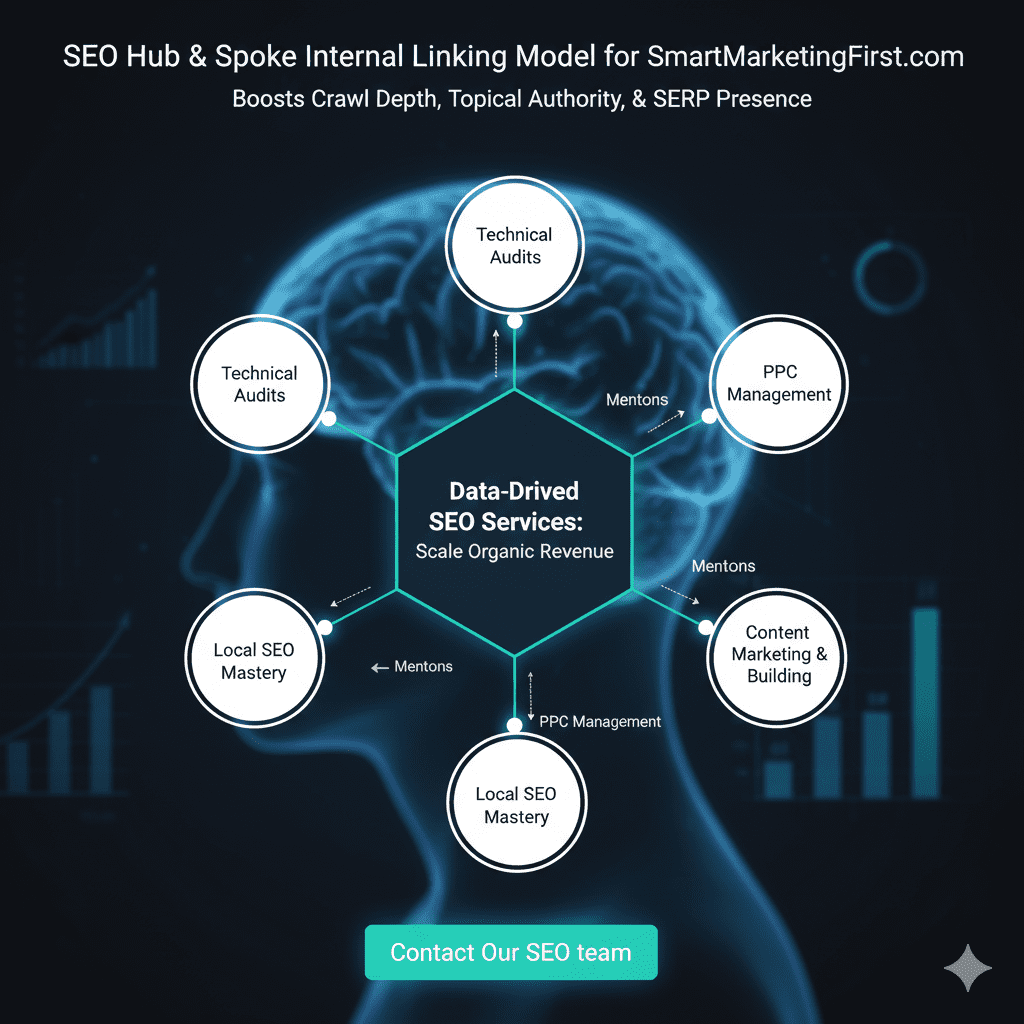
Your website's foundation determines everything that follows. We begin every engagement with a comprehensive technical audit that examines the infrastructure search engines rely on to discover, crawl, and index your content. Our diagnostic process identifies crawlability issues—broken links, redirect chains, and XML sitemap errors—that prevent search engines from accessing your most valuable pages.
Site speed isn't just a ranking factor; it's a conversion factor. We analyze Core Web Vitals metrics including Largest Contentful Paint (LCP), First Input Delay (FID), and Cumulative Layout Shift (CLS) to ensure your site delivers the fast, stable experience users expect. Our technical recommendations address server response times, render-blocking resources, and image optimization to create measurable improvements in both performance scores and user engagement.
We also examine your site architecture, URL structure, canonical implementation, and schema markup to ensure search engines understand your content hierarchy and relationships. Every technical barrier we remove is another opportunity for your expertise to reach the customers searching for it.
Content tuning transforms good pages into high-performing assets. We analyze your existing content against search intent, identifying opportunities to better match what users are actually seeking when they enter specific queries. This process goes beyond keyword density to examine semantic relevance, topic comprehensiveness, and content structure.
Our metadata optimization ensures every title tag and meta description serves dual purposes: signaling relevance to search algorithms while compelling clicks from real people scanning search results. We map keywords strategically across your site, ensuring each page targets distinct search opportunities without cannibalizing its own rankings through internal competition.
Header hierarchy, internal linking patterns, and content formatting all receive attention during on-page optimization. These elements guide both users and search engines through your content, establishing clear pathways to conversion while distributing ranking authority where it matters most.
Experience, Expertise, Authoritativeness, and Trustworthiness—Google's E-E-A-T framework—defines how search engines evaluate content quality. We develop content strategies that demonstrate your genuine expertise through detailed, experience-based insights your competitors cannot replicate. This means creating resources that answer real customer questions, address industry developments, and showcase the depth of knowledge that comes from mastering your craft.
Our link building approach prioritizes quality over quantity, pursuing editorial placements from relevant, authoritative sources within your industry. We avoid manipulative tactics that create short-term gains but long-term penalties. Instead, we focus on creating content worthy of natural citations and building relationships with industry publishers, complementary businesses, and professional organizations that enhance your digital footprint authentically.
Authority building is cumulative. Each authoritative link, each comprehensive guide, each expert-level insight contributes to the trust signals that elevate your rankings and establish your brand as the definitive source in your field.
For businesses serving specific geographic markets, local SEO visibility directly impacts revenue. We optimize your Google Business Profile with strategic category selection, complete business information, and regular posts that signal active engagement. Your profile becomes a conversion tool, not just a listing.
Citation consistency—ensuring your business name, address, and phone number appear identically across hundreds of online directories—builds the location signals search engines use to determine local relevance. We audit existing citations, correct inconsistencies, and establish your presence in industry-specific directories that matter for your market.
Local content strategies, location-specific landing pages, and review management round out our local SEO approach, creating multiple pathways for nearby customers to discover your expertise exactly when they need it.
Effective SEO requires methodical execution, not guesswork. Our proven process transforms technical audits and competitive insights into measurable rankings, traffic, and revenue growth. Every engagement follows the same disciplined approach, refined through years of delivering results across industries. Here's exactly how we work.
Every successful SEO campaign begins with understanding your current position. Our discovery phase examines three critical dimensions: technical infrastructure, content performance, and competitive landscape.
We start with a comprehensive technical crawl of your entire website, identifying issues that prevent search engines from properly accessing, interpreting, and indexing your content. This includes analyzing crawl budget allocation, identifying redirect chains that waste link equity, finding broken internal links that create dead ends, and examining robots.txt files that may inadvertently block important pages. We review your XML sitemap structure, checking for missing pages, incorrect priority signals, and outdated URLs that confuse search engines about which content matters most.
Site speed analysis goes beyond basic page load times. We measure Core Web Vitals across multiple devices and connection speeds, identifying render-blocking resources, oversized images, inefficient JavaScript execution, and server response delays. Our audit documents how long users wait for interactive elements, how much content shifts during loading, and where performance bottlenecks create abandonment risks. Each millisecond of delay costs conversions—we quantify exactly where those losses occur.
Our content audit evaluates your existing pages against search intent and competitive benchmarks. We identify thin content that lacks depth, keyword cannibalization where multiple pages compete for identical searches, and gaps where valuable search opportunities have no corresponding landing page. We analyze your internal linking structure to understand how authority flows through your site and identify orphaned pages that receive no internal links despite containing valuable content.
The competitive analysis reveals who currently dominates your target keywords and why. We examine competitor backlink profiles to identify link sources you're missing, analyze their content depth and structure to understand what Google rewards, and map their keyword targeting to find opportunities they've overlooked. This intelligence informs every strategic decision that follows.
By the end of discovery, you receive a prioritized roadmap of technical issues, content opportunities, and competitive gaps—complete with projected impact for each recommendation. Nothing happens by chance; every action connects directly to measurable business outcomes.
Data without strategy generates busywork, not results. Our strategy development phase transforms audit findings into an actionable plan that targets your highest-value opportunities first.
Competitor gap analysis forms the foundation of this strategy. We identify keywords where competitors rank in positions one through three while you appear on page two or beyond—these represent your fastest wins because Google already considers the topic relevant to your site. We analyze which content formats dominate these searches (long-form guides, comparison pages, video content, local service pages) and what common elements the top-ranking pages share in terms of word count, structure, and depth.
We map the competitive backlink landscape to find link sources you can realistically acquire. This includes identifying industry publications that link to multiple competitors but not to you, finding broken links on authoritative sites that your content could replace, and discovering unlinked brand mentions that can be converted into proper citations. We avoid pursuing links from sources outside your industry or relevance sphere—quality always outweighs quantity in sustainable link building.
Keyword prioritization balances search volume, commercial intent, and ranking difficulty. We identify quick-win keywords where minor optimizations could move you from position eleven to page one, high-value terms that drive actual customers despite lower search volume, and long-tail variations that collectively deliver substantial traffic with less competition. Each keyword gets assigned to a specific page, preventing internal competition while building topical authority across related searches.
Our content strategy outlines exactly what needs to be created, optimized, or retired. This includes specifying target word counts based on competitive analysis, defining required subtopics to cover comprehensively, identifying internal linking opportunities that distribute authority strategically, and establishing content refresh schedules for time-sensitive pages. Every piece of content we recommend serves a specific purpose in your broader ranking strategy.
Technical prioritization separates critical fixes from nice-to-have improvements. Site-wide issues that prevent indexation take precedence, followed by performance optimizations that impact user experience across multiple pages, then page-specific improvements that enhance individual landing pages. We provide clear timelines and resource requirements so you understand exactly what implementation demands.
The deliverable at this stage is a 90-day action plan with specific tasks, responsible parties, success metrics, and expected completion dates. This roadmap becomes the contract between strategy and execution.
Strategy without execution changes nothing. Our implementation phase brings recommendations to life through coordinated on-site optimizations and off-site authority building.
On-site execution begins with critical technical fixes. We implement proper canonical tags to consolidate duplicate content signals, optimize robots.txt to ensure crawl efficiency, restructure XML sitemaps to highlight your most important pages, and add structured data markup that helps search engines understand your content context. We compress images without sacrificing quality, eliminate render-blocking resources that delay page interactivity, implement lazy loading for below-the-fold content, and configure browser caching that accelerates repeat visits.
Content optimization follows technical fixes. We rewrite title tags and meta descriptions to improve click-through rates from search results, restructure headers to better match search intent and improve readability, expand thin content with comprehensive coverage of related subtopics, and add strategic internal links that guide users to related resources while distributing page authority. Each optimization follows the keyword map developed during strategy, ensuring no page competes with another for the same rankings.
New content creation fills gaps identified during competitive analysis. This includes developing comprehensive guides that establish topical authority, creating comparison pages that target high-intent commercial searches, building location-specific landing pages for local service areas, and producing regularly updated content that demonstrates fresh expertise. Every piece undergoes review to ensure it meets E-E-A-T standards and provides genuine value users cannot find elsewhere.
Off-site execution focuses on ethical authority building. We pursue guest contributions to industry publications where your expertise adds genuine value, develop linkable assets like original research or comprehensive resources that naturally attract citations, conduct digital PR campaigns that earn media mentions from authoritative news sources, and build relationships with complementary businesses for strategic partnership opportunities. We track every outreach effort, monitor acquisition rates, and continuously refine our approach based on what earns placements in your specific industry.
For local SEO clients, execution includes optimizing and actively managing Google Business Profiles, building citations across relevant directories, generating authentic customer reviews through systematic request campaigns, and creating locally-focused content that addresses community-specific needs. These efforts build the geographic relevance signals that dominate local search results.
Transparency builds trust. Our monthly reporting provides complete visibility into what we've accomplished, what's working, and where we're directing focus next.
Each report tracks the metrics that matter: organic search traffic trends, keyword ranking movements for your priority terms, conversion rates from organic visitors, backlink acquisition quantity and quality, technical health scores, and Core Web Vitals performance. We don't hide behind vanity metrics—if traffic increases but conversions decline, we investigate why and adjust strategy accordingly.
Ranking reports show position changes for every tracked keyword, highlighting wins worth celebrating and losses requiring attention. We provide context for fluctuations, explaining algorithm updates, seasonal trends, or competitive actions that impact your visibility. You'll understand not just what changed, but why it changed and what we're doing about it.
Traffic analysis goes beyond total visitor counts. We segment organic traffic by landing page to identify your highest-performing content, analyze user behavior to understand engagement patterns, track assisted conversions where organic visits contribute to eventual sales, and compare performance across device types and geographic regions. These insights inform ongoing content and technical optimization priorities.
Backlink reports document every new link acquired, including the source domain, anchor text used, page linked to, and our assessment of link quality. We also monitor lost links, identifying when valuable citations disappear so we can work to reclaim them. Total link counts matter less than the trend in high-authority placements from relevant sources.
Action plans outline next month's priorities based on current performance. If certain keywords are stuck on page two, we explain our plan to push them into top positions. If technical issues emerged, we detail the fix timeline. If new competitive threats appeared, we describe our response strategy.
Regular reporting calls ensure you understand the data and have opportunities to ask questions, provide feedback, or adjust priorities based on changing business needs. SEO is a partnership—our job is keeping you informed and confident about where your investment goes and what returns it generates.
This process isn't theoretical. It's the same approach that has delivered measurable results for clients across industries, and it's exactly how we'll approach your unique challenges and opportunities.
* Do not see what you need? contact us for a custom Package!
The honest answer: SEO operates on search engine timelines, not business quarter timelines. Most businesses begin seeing measurable improvements within three to six months, with substantial results emerging between six and twelve months. This isn't a limitation of our process—it's how search engines evaluate and reward websites.
Understanding why SEO takes time requires understanding how search engines work. When we optimize a page or build a new link, Google doesn't immediately adjust your rankings. Search engines crawl billions of pages continuously, recrawling your site anywhere from daily to weekly depending on your domain authority and update frequency. After crawling, they must process the changes, evaluate how your improvements compare to hundreds of competing pages, and test new rankings with small user segments before making permanent adjustments. This cycle repeats constantly as we implement optimizations and as competitors make their own changes.
The timeline also varies significantly based on your starting position. If your website suffers from serious technical issues—slow loading speeds, crawlability problems, or mobile usability errors—we must fix these foundational problems before search engines will reward content improvements. A site launching from scratch faces longer timelines than an established domain with existing authority. Highly competitive industries where dozens of companies invest heavily in SEO naturally require more time to break through than niche markets with limited competition.
Certain improvements do show faster results. Fixing critical technical errors that prevent indexation can produce ranking jumps within weeks once search engines recrawl your corrected pages. Optimizing existing content that already ranks on page two often moves into top positions within one to three months. Adding location-specific content for uncontested local searches can generate visibility relatively quickly. These early wins build momentum while larger strategic initiatives mature.
The real question isn't how quickly you see results—it's whether you're willing to commit to the timeline required for sustainable success. SEO delivers compounding returns. Rankings achieved through ethical optimization typically strengthen over time as you build more content, earn more links, and accumulate more positive user signals. Businesses that maintain consistent SEO investment for eighteen to twenty-four months often dominate their markets with traffic and visibility that would cost exponentially more through paid advertising.
Companies promising first-page rankings in thirty days either target keywords nobody searches for or use manipulative tactics that trigger penalties, destroying your visibility when Google catches on. We focus on sustainable growth that builds lasting competitive advantages, not temporary ranking spikes that vanish when the algorithm updates.
Progress happens continuously even when rankings remain stable. Improvements in site speed enhance user experience and conversion rates regardless of position changes. Content optimization increases engagement metrics that eventually influence rankings. Authority building through quality link acquisition accumulates trust signals that compound over time. Smart businesses measure SEO success not just by rankings but by organic traffic growth, lead quality improvements, and increasing share of relevant search visibility.
Set realistic expectations: invest in a minimum six-month engagement to see meaningful results, commit to twelve months to achieve substantial market share, and plan for ongoing optimization to maintain and expand your visibility as markets evolve and competitors adjust their strategies.
On-page and off-page SEO represent two sides of the same visibility equation. On-page SEO encompasses everything you control directly on your website, while off-page SEO involves external signals that indicate your authority and relevance. Both are essential—neglecting either limits your potential regardless of how well you execute the other.
On-page SEO starts with technical infrastructure. This includes ensuring search engines can crawl your site efficiently, implementing proper URL structures that communicate page hierarchy, optimizing site speed and Core Web Vitals that affect both rankings and user experience, creating mobile-responsive designs that work across all devices, and adding structured data markup that helps search engines understand your content context. Technical on-page factors form the foundation—without them, even exceptional content struggles to rank.
Content optimization represents the most visible aspect of on-page SEO. This involves researching and targeting keywords that align with what your customers actually search, crafting compelling title tags and meta descriptions that drive clicks from search results, structuring content with strategic header hierarchies that improve readability and topical relevance, incorporating semantic keywords that demonstrate comprehensive topic coverage, and optimizing images with descriptive alt text and compressed file sizes. Every element on your page sends signals about what topics you cover and how thoroughly you address them.
Internal linking strategy falls under on-page SEO, even though it connects multiple pages. Strategic internal links guide users to related content, distribute page authority throughout your site, help search engines understand your site structure and content relationships, and reduce bounce rates by encouraging deeper engagement. Well-executed internal linking can elevate important pages without acquiring any external links.
User experience optimization increasingly influences on-page effectiveness. This includes designing clear navigation that helps visitors find information quickly, improving content readability with appropriate paragraph lengths and formatting, optimizing conversion pathways that turn visitors into leads or customers, and reducing intrusive elements like excessive pop-ups that frustrate users. Google measures user behavior signals like time on site, bounce rates, and return visits—all influenced by on-page experience choices.
Off-page SEO primarily revolves around link building, but encompasses broader authority signals. Backlinks from other websites function like votes of confidence. When authoritative sites in your industry link to your content, they tell search engines your information is trustworthy and valuable. Not all links carry equal weight—a single link from a highly respected industry publication provides more value than dozens of links from low-quality directories or unrelated websites.
Quality matters exponentially more than quantity in off-page SEO. Search engines evaluate the authority of domains linking to you using hundreds of factors, the relevance of linking sites to your industry and topics, the context surrounding your link within their content, the anchor text used in the link, and the diversity of your link profile across many domains rather than concentrated in a few sources. One authoritative link earned through expert content often outweighs fifty manipulative links from purchased placements.
Off-page SEO extends beyond traditional link building. Brand mentions without links still provide authority signals when reputable sources reference your company. Social signals—while not direct ranking factors—increase content visibility and can lead to natural link acquisition. Online reviews, particularly on Google Business Profiles, influence both rankings and click-through rates for local businesses. Industry citations in directories, business associations, and trade publications establish your legitimacy within your field.
The relationship between on-page and off-page SEO is symbiotic. Exceptional on-page optimization makes your content worth linking to—few sites will cite thin, poorly-written, or technically broken pages regardless of your outreach efforts. Strong off-page authority signals tell search engines your on-page content deserves trust and prominent rankings. A site with perfect on-page SEO but no external validation struggles to outrank competitors with balanced approaches. Conversely, many backlinks pointing to a technically broken or irrelevant page waste the authority those links could provide.
Effective SEO strategies allocate resources to both areas proportionally. New websites with limited authority typically benefit from heavier initial investment in on-page optimization to ensure their foundation is solid before pursuing extensive link building. Established sites with strong technical and content foundations often see better returns from focusing more on off-page authority building. The optimal balance shifts as your site matures and competitive dynamics evolve.
Local SEO isn't optional for businesses serving specific geographic markets—it's the difference between visibility and invisibility when nearby customers need your services right now. The local search landscape operates on different rules than traditional organic search, creating opportunities for smaller businesses to outrank larger national competitors in their service areas.
Consider how customers find local businesses today. Someone searching "plumber near me" or "divorce attorney in Austin" demonstrates immediate intent to hire within their area. Google recognizes this local intent and displays specialized local results—the map pack showing three businesses with locations, ratings, and contact information—before traditional organic listings. Appearing in this map pack generates exponentially more clicks than ranking tenth in organic results. Local SEO optimization determines who appears in these high-visibility positions.
Google Business Profile optimization forms the foundation of local visibility. Your profile provides Google with essential information: your exact location, service area, business categories, hours of operation, contact details, and visual representation through photos. Incomplete or inaccurate profiles severely limit your visibility. We regularly encounter businesses losing customers to competitors simply because their Google profile lacks basic information like updated hours or a phone number, while their competitor's complete profile earns the click despite possibly offering inferior service.
Local ranking factors differ significantly from traditional SEO. Proximity to the searcher's location heavily influences who appears in local results—the best-optimized business ten miles away often loses to an adequately optimized business two miles away. This means local SEO levels the playing field. Your small business can outrank national chains in your immediate area when you optimize correctly for local signals.
Citation consistency across online directories builds critical trust signals. When Google finds your business name, address, and phone number listed identically across hundreds of websites—from major directories like Yelp and Yellow Pages to industry-specific platforms and local business associations—it confirms your business is legitimate and accurately represented. Inconsistent citations confuse search engines and dilute your local authority. We've seen businesses lose map pack rankings simply because they listed their address as "Street" on some directories and "St." on others, or because they changed phone numbers without updating old citations.
Online reviews directly impact local rankings and conversion rates. Google explicitly states reviews influence local search positions. Beyond rankings, reviews provide the social proof that converts searchers into customers. A business with 47 five-star reviews attracts more clicks than a business with six reviews, even if both rank in the map pack. Review generation and response management aren't optional components of local SEO—they're essential elements that compound your visibility advantages.
Local content creation demonstrates geographic relevance to search engines. This includes developing service pages specific to each city or neighborhood you serve, creating content addressing local events or community issues relevant to your industry, showcasing local case studies or customer success stories, and optimizing for location-specific search variations. When someone searches "roofing contractor in [specific neighborhood]," businesses with dedicated content for that neighborhood outrank those with only city-level pages.
Mobile optimization carries extra weight in local SEO because most local searches happen on mobile devices. Someone searching for a restaurant while walking downtown or a emergency service while facing a crisis needs immediate results on their phone. Slow-loading mobile sites or difficult-to-navigate contact information cost you customers at the exact moment they're ready to choose a business.
The competitive dynamics of local search create sustainable advantages. National companies often neglect local optimization because they operate in too many markets to manage individual location strategies effectively. This creates opportunities for local businesses that invest in proper optimization. Once you establish strong local visibility, maintaining it requires less effort than building it initially, while competitors starting from zero face the same lengthy timeline you already completed.
Local SEO delivers measurable ROI more directly than broader organic strategies. Local searches convert at higher rates because they demonstrate immediate intent. Someone searching "emergency dentist near me" or "pizza delivery in [neighborhood]" is ready to make a decision now. Capturing these high-intent searches at the moment they occur generates immediate business, not vague future opportunities.
For businesses with multiple locations, local SEO scales your visibility across all service areas simultaneously. Each location can dominate its local search results, multiplying your total visibility across your entire market footprint. This geographic leverage is impossible to achieve through traditional advertising without exponentially higher costs.
The question isn't whether you need local SEO—it's whether you can afford to let competitors capture customers actively searching for your services in your market while you remain invisible.